For years, IB students were told a comforting story:
“Your Internal Assessment is where you secure easy marks.”
It sounded like a safety net. A controlled environment. A place where effort translates directly into points.
But in 2026, that safety net feels… thinner.
Because something subtle has shifted.
Not in the IB rubric.
Not in the marking scheme.
But in the competition.
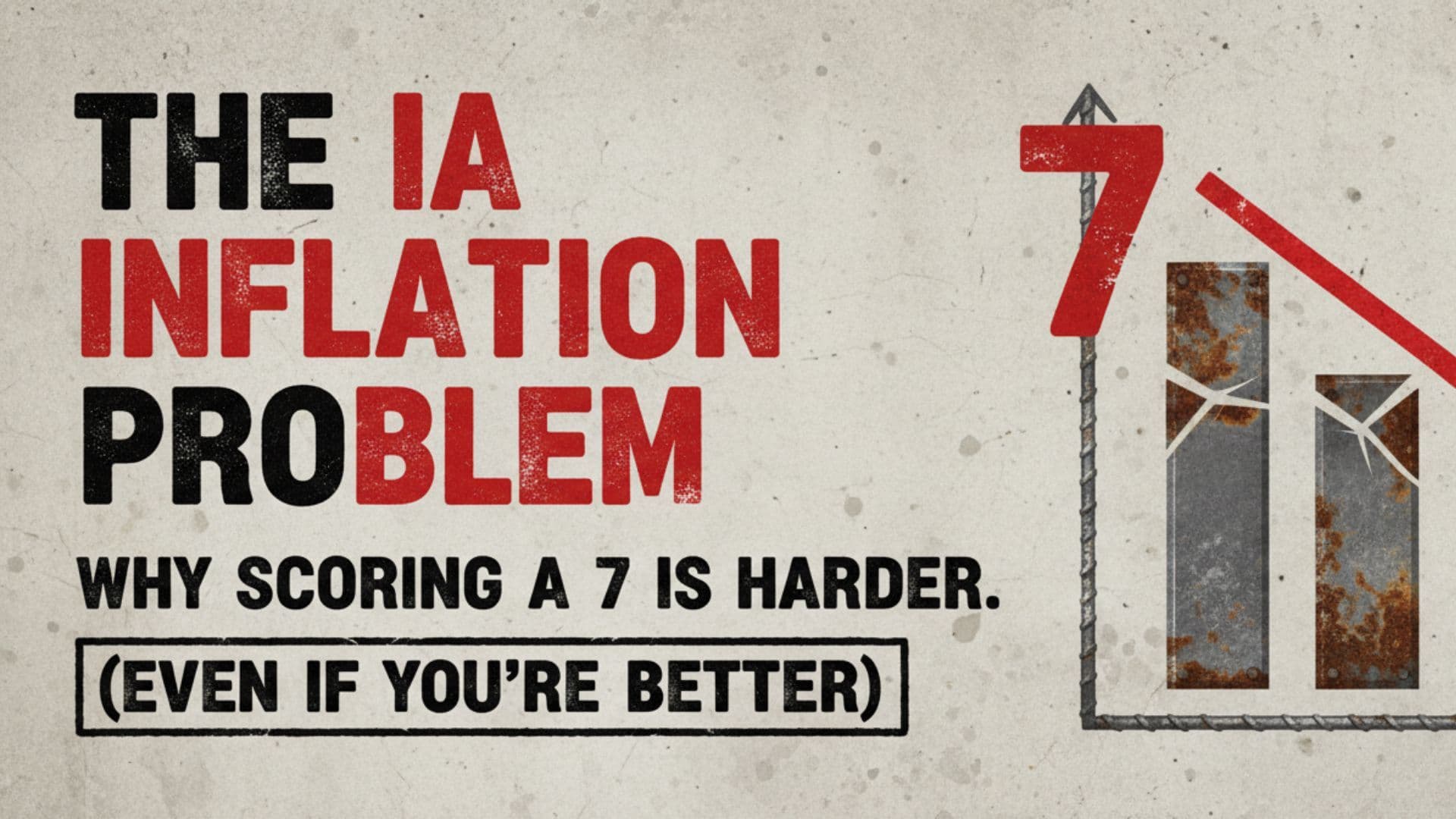
Welcome to the IA Inflation Problem where even stronger students are finding it harder to stand out.
🧠 The Myth: “IA = Easy Marks”
The logic used to be simple:
- Follow the structure
- Meet the criteria
- Avoid mistakes
- Get a 6 or 7
And for a long time, that worked.
But now, that same checklist is being followed by everyone.
So what happens when everyone does everything “right”?
👉 The definition of “excellent” changes.
📈 What Changed in the Last Few Years
Three forces quietly reshaped the IA landscape:
1. 📚 Access Explosion
Students now have:
- High-scoring sample IAs
- Step-by-step guides
- YouTube walkthroughs
The gap between “average” and “well-structured” has collapsed.
2. 🤖 AI Assistance
From idea generation to editing, AI tools help students:
- Refine structure
- Improve wording
- Fix clarity issues
Result?
👉 Fewer bad IAs.
But also… fewer distinct ones.
3. 🎯 Strategic Optimization
Students are no longer guessing.
They:
- Reverse-engineer mark schemes
- Copy proven formats
- Play it safe
Which leads to a strange outcome:
The average IA today looks like a former top-tier IA.
🧩 Why Everyone’s IA Looks the Same Now
Open five recent IAs in the same subject.
You’ll notice a pattern:
- Similar introductions
- Identical structure flow
- Predictable evaluation sections
- Same “limitations and improvements” language
It’s like different students are using the same blueprint.
Because they are.
This is what we can call:
Template-Level Perfection
Everything is correct.
Everything is polished.
Nothing is memorable.
⚖️ How IB Moderation Actually Adjusts Scores
Here’s where reality hits.
Your IA is not just graded by your teacher.
It’s moderated.
That means:
- IB examiners review samples from your school
- They compare standards across schools globally
- They adjust scores if needed
Now imagine this:
If every IA looks similar and “technically strong,”
how do examiners differentiate?
👉 They lean harder on depth, originality, and insight.
And when that’s missing?
Scores get pulled down.
📉 Why a Technically Perfect IA Can Still Score a 5
This is the frustrating part for many students.
You might have:
- Clean structure ✅
- Correct methodology ✅
- No obvious errors ✅
And still land at a 5.
Why?
Because:
- Your analysis is predictable
- Your conclusions are surface-level
- Your engagement feels mechanical
In short:
You did everything right… except think differently.
🎯 The New Rule: Insight > Structure
In 2026, structure is the baseline.
It no longer earns top marks.
It just keeps you in the game.
What separates a 7 now is:
- How deeply you interpret results
- How personally you engage with the topic
- How clearly you show independent thinking
Examiners are asking:
“Did this student think… or just execute?”
🧠 What a Level 7 IA Looks Like in 2026
A true top-scoring IA today feels different.
Not louder. Not more complex. Just… sharper.
It has:
- Clear but not formulaic structure
- Original angles or perspectives
- Moments of genuine insight
- Critical evaluation beyond textbook phrases
It doesn’t just answer the research question.
It explores it.
🚀 How to Stand Out (Without Overcomplicating)
You don’t need a groundbreaking topic.
You need a distinct approach.
1. 🔍 Go One Layer Deeper
Don’t stop at:
“This result shows…”
Ask:
“Why does this matter?”
“What does this imply?”
2. 🧩 Challenge Your Own Work
Most students write evaluations like a checklist.
Instead:
- Question your assumptions
- Explore alternative explanations
- Acknowledge uncertainty honestly
3. 🎯 Avoid Template Language
Phrases like:
- “This investigation could be improved by…”
- “A limitation of this study is…”
…are overused.
Say the same ideas, but in your own analytical voice.
4. 🧠 Show Thinking, Not Just Results
Examiners reward process visibility.
Let them see:
- Why you chose a method
- What you considered but rejected
- How your understanding evolved
⚡ The Real Shift
The IA hasn’t become harder because the rubric changed.
It’s become harder because:
👉 The average student got better at execution
👉 So top scores now depend on differentiation
🎯 Final Takeaway
The era of “safe IA marks” is fading.
In its place is a more demanding reality:
Where:
- Structure is expected
- Clarity is assumed
- And only insight stands out
So if you’re aiming for a 7, don’t just ask:
“Is my IA correct?”
Ask:
“Is my IA interesting to read for an examiner who has seen 100 similar ones?”
Because in 2026…
The students who win aren’t the ones who follow the template best.
They’re the ones who quietly step beyond it.
Table of contents
Share
Related reading
- IB Predicted Grades vs Final Results: What Actually Gets You InConfused between IB predicted grades and final results? Learn what actually gets you into top universities, how offers work, and the smart strategy to secure your admission in 2026.
- IB 2026 Grading Shift: What Every Student Must KnowWhy IB students in the UAE and Gulf received predicted grades in 2026, how universities recognise NECM results, and what it means for every student.
- IB Grade Boundaries 2026: Predictions & TrendsIB grade boundaries 2026 are rising due to AI moderation and global competition. See predicted thresholds for Maths, Sciences, English & how to adapt.
- IB Burnout Crisis 2026: Why Smart Students Are StrugglingWhy are top IB students burning out in 2026? Uncover the data, root causes, and 7 practical recovery strategies for MYP and DP. Read the guide now.
