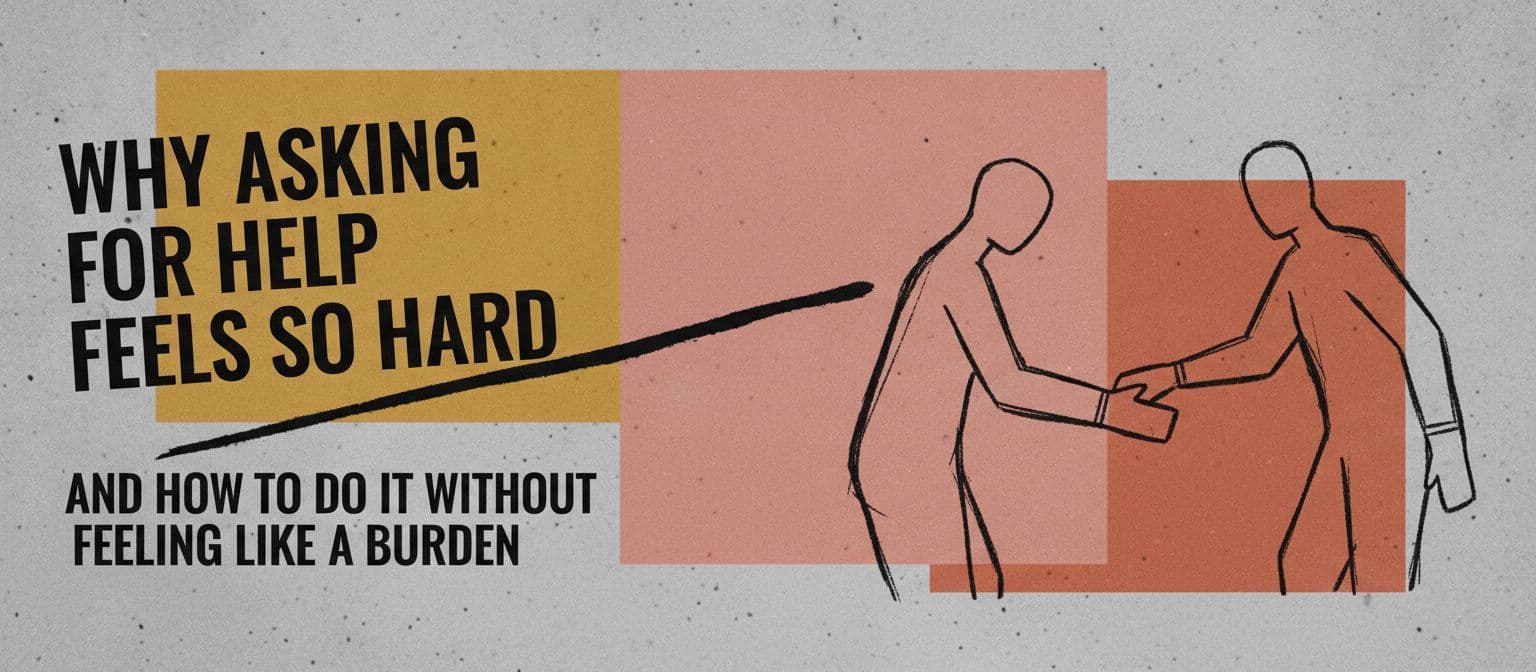
The Silent Struggle of Needing Help
There is a strange contradiction in human behavior. Most of us are willing to help others without hesitation, yet when we need support ourselves, asking for it can feel uncomfortable, embarrassing, or even selfish.
You may have experienced this feeling before. Perhaps you were overwhelmed at work but avoided asking your manager for guidance. Maybe you struggled with your studies but convinced yourself that everyone else was handling things better. Or perhaps you were going through a difficult emotional period and kept telling yourself that you did not want to burden your friends or family.
The fear of asking for help is surprisingly common. It affects students, professionals, parents, entrepreneurs, and even highly successful individuals. Many people suffer in silence, not because help is unavailable, but because asking for it feels harder than carrying the burden alone.
The truth is that asking for help is not a sign of weakness. It is a skill, and like any skill, it can be learned and improved.
Why We Feel Like a Burden in the First Place
The feeling of being a burden rarely appears out of nowhere. It often develops from experiences, beliefs, and social expectations that shape how we view ourselves and our relationships.
Many people grow up hearing messages such as:
- Be independent.
- Solve your own problems.
- Do not bother others.
- Stay strong.
While these lessons can encourage responsibility, they can also create the belief that needing help is somehow a personal failure.
There is also the fear of rejection. Asking for help requires vulnerability. It means admitting that we do not have all the answers or that we cannot manage everything alone. The possibility that someone might say no can feel deeply uncomfortable.
Another reason is the tendency to underestimate our value in relationships. We often assume that our problems are less important than everyone else's or that people are helping us out of obligation rather than genuine care.
Ironically, we rarely apply these same standards to others.
The Double Standard We Create
Imagine a close friend calling you and saying:
"I am having a difficult time and could really use your help."
Would you think they were a burden?
Most likely, no.
You would probably appreciate their trust, listen carefully, and do whatever you could to support them.
Yet when the situation is reversed, many of us tell ourselves a completely different story.
We think:
- I should handle this myself.
- They are too busy.
- My problem is not important enough.
- I do not want to inconvenience anyone.
This double standard reveals something important. The issue is not that asking for help is wrong. The issue is that we judge ourselves more harshly than we judge others.
Recognizing this bias is often the first step toward changing it.
Why Asking for Help Is Actually a Strength
Popular culture often celebrates independence and self sufficiency. While these qualities are valuable, complete independence is neither realistic nor healthy.
Human beings are social by nature. Communities, friendships, families, and workplaces function because people support one another.
Asking for help demonstrates several strengths:
- Self awareness.
- Emotional intelligence.
- Humility.
- Courage.
- Trust.
In professional environments, employees who seek clarification often perform better than those who pretend to understand everything.
In education, students who ask questions typically learn more effectively.
In personal relationships, vulnerability often strengthens connection rather than weakening it.
The ability to ask for help is not evidence of inadequacy. It is evidence of maturity.
Understanding That People Generally Want to Help
One of the biggest misconceptions about asking for help is the assumption that others will feel annoyed or inconvenienced.
Research in psychology has repeatedly shown that people tend to underestimate how willing others are to provide assistance.
In fact, helping others often creates positive emotions.
When someone asks for advice, support, or guidance, the person being asked frequently experiences:
- A sense of purpose.
- Increased connection.
- Greater trust.
- Personal satisfaction.
Think about the last time someone sincerely asked for your help. Chances are, you felt appreciated rather than burdened.
The same principle often applies when you ask others for support.
Start by Redefining What Help Means
Many people imagine that asking for help means handing over responsibility entirely.
In reality, help exists on a spectrum.
Asking for help can mean:
- Requesting advice.
- Seeking feedback.
- Asking for clarification.
- Sharing emotional struggles.
- Requesting practical assistance.
- Looking for encouragement.
Not every request requires a major commitment from another person.
Sometimes, simply talking through a problem with someone else can provide the clarity you need.
Viewing help as collaboration rather than dependency can make the process feel much less intimidating.
Be Specific About What You Need
One reason asking for help feels uncomfortable is uncertainty.
If you approach someone with a vague statement such as:
"I do not know what to do."
The conversation can feel overwhelming for both parties.
Instead, try to identify exactly what kind of support would be most useful.
For example:
- "Could you review my resume?"
- "Can we talk for fifteen minutes?"
- "Could you explain this concept?"
- "Would you be available to give me feedback?"
Specific requests make it easier for people to understand how they can help and reduce the pressure on everyone involved.
Clarity creates comfort.
Accept That Some People May Say No
One of the greatest fears surrounding asking for help is rejection.
However, hearing "no" does not mean you were wrong to ask.
People decline requests for many reasons:
- They may be busy.
- They may lack the necessary expertise.
- They may be dealing with personal challenges.
- They may simply not have the capacity at that moment.
A refusal is usually a reflection of circumstances, not your worth.
Learning to separate rejection from personal value is an important emotional skill.
The goal is not to ensure that everyone says yes.
The goal is to become comfortable asking.
Practice Asking for Small Things First
If asking for help feels extremely difficult, start small.
You do not need to begin by sharing your deepest struggles or biggest fears.
Instead, practice with low pressure requests.
You might:
- Ask a colleague for advice.
- Request recommendations from a friend.
- Seek clarification during a class.
- Ask for feedback on a project.
Each positive experience helps retrain your brain to view asking for help as normal rather than threatening.
Confidence often grows through repetition.
Stop Apologizing for Having Needs
Many people begin requests with excessive apologies.
Examples include:
- "Sorry for bothering you."
- "I know you are probably too busy."
- "This is probably a stupid question."
These statements reinforce the belief that your needs are inconvenient.
Of course, politeness matters. Gratitude matters.
But there is a difference between being respectful and minimizing yourself.
Instead of apologizing for existing, try communicating with confidence and appreciation.
For example:
"Would you have a few minutes to help me understand this? I would really appreciate your perspective."
This approach acknowledges the other person's time while also respecting your own needs.
Remember That Relationships Are Not Transactions
Another reason people avoid asking for help is the belief that they must immediately repay every act of support.
Healthy relationships rarely operate like accounting systems.
Friendships, families, and communities thrive through mutual care over time.
There will be moments when you give more.
There will also be moments when you need more.
This balance naturally shifts throughout life.
Allowing others to support you is not taking advantage of them. It is participating in the human experience of giving and receiving care.
What Happens When You Never Ask for Help
Avoiding help may feel safer in the short term, but it often creates larger problems over time.
When people refuse to seek support, they may experience:
- Increased stress.
- Burnout.
- Isolation.
- Anxiety.
- Reduced performance.
- Emotional exhaustion.
The burden they were trying so hard not to place on others often becomes a much heavier burden for themselves.
Strength does not come from carrying everything alone.
Strength comes from knowing when carrying everything alone is no longer necessary.
A Simple Framework for Asking for Help
If you struggle with asking for support, remember this simple framework:
Recognize the Need
Acknowledge that you are struggling or need assistance.
Identify the Right Person
Choose someone who is likely to provide the type of support you need.
Make a Clear Request
Explain specifically what would help you.
Accept the Response
Whether the answer is yes or no, remember that your request was valid.
Express Gratitude
Appreciate the person's time and willingness to listen.
Following these steps can transform asking for help from an emotional challenge into a practical skill.
Final Thoughts
The fear of being a burden has prevented countless people from receiving the support they needed most.
Yet the reality is that asking for help is not a weakness, a failure, or an inconvenience. It is a deeply human act.
Every person, regardless of their strength, intelligence, or success, reaches moments when they need guidance, encouragement, or support.
The people who appear strongest are often not the ones who carry everything alone. They are the ones who understand that strength and vulnerability can exist together.
The next time you find yourself struggling in silence, remember this:
You are not a burden because you need help.
You are simply human.
Table of contents
Share
Related reading
- IB Burnout Crisis 2026: Why Smart Students Are StrugglingWhy are top IB students burning out in 2026? Uncover the data, root causes, and 7 practical recovery strategies for MYP and DP. Read the guide now.
- Why IB Results Day Feels Bigger for Students Chasing Global DreamsWhy does IB Results Day feel so intense? Learn how it impacts university offers, scholarships, and your study abroad plans. Read the full guide today.
- Feeling Behind in the IB? Here's How to Protect Your MindFeeling behind in the IB? Learn practical strategies to protect your mental health, manage academic pressure, and thrive without burnout.
