Introduction
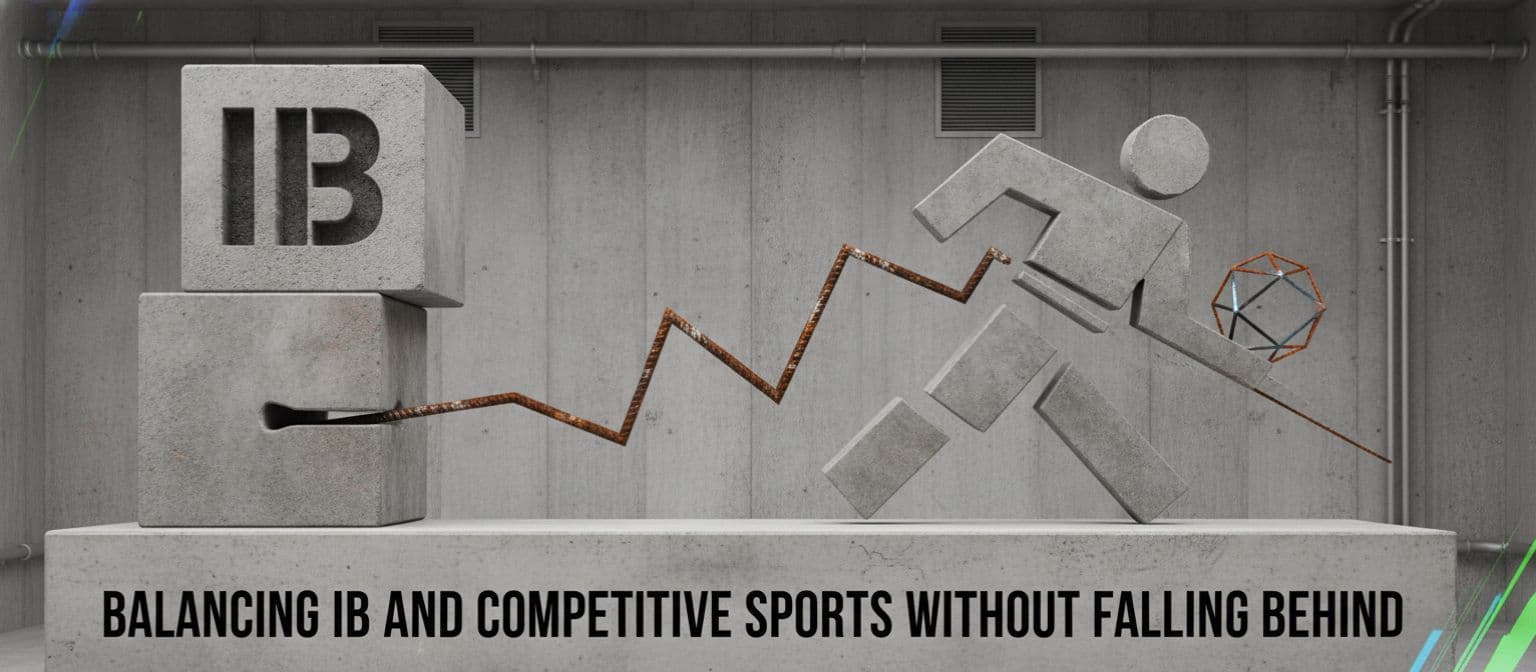
For many students, the International Baccalaureate is already one of the most demanding academic programs in the world. Add competitive sports into the equation, and it can feel like managing two full time commitments simultaneously.
Early morning training sessions, weekend tournaments, travel schedules, physical recovery, assignments, Internal Assessments, Extended Essays, and exam preparation can quickly overwhelm even the most disciplined students.
Yet every year, student athletes around the world successfully complete the IB while competing at high levels in football, basketball, swimming, tennis, athletics, gymnastics, and countless other sports.
The difference is not that they have more time.
The difference is that they learn how to manage their energy, priorities, and systems more effectively than most students.
If you are pursuing both the IB and competitive sports, this guide will help you understand how to succeed academically without sacrificing your athletic goals.
Why the Combination Feels So Difficult
The challenge is not simply that both activities require time.
The real challenge is that they demand different kinds of performance.
The IB requires:
- Deep concentration
- Critical thinking
- Consistent coursework completion
- Long term project management
- Strong writing and analytical skills
Competitive sports require:
- Physical endurance
- Regular practice
- Mental resilience
- Recovery and nutrition
- Consistent performance under pressure
Both require excellence. Both have deadlines. Both demand commitment.
When students try to treat one as primary and the other as secondary, problems often begin to appear.
Many athletes fall behind academically during competition seasons. Others reduce their training because academic pressure becomes overwhelming.
The key is recognizing that both goals can coexist with the right strategy.
The Biggest Myth About Student Athletes
One of the most common misconceptions is that successful student athletes simply work harder than everyone else.
In reality, most high performing student athletes become experts at efficiency.
They understand that they cannot afford wasted time.
A student with five free hours after school may procrastinate for three of those hours.
A student athlete may only have one hour available and therefore learns to use that hour effectively.
The result is often surprising.
Students with less available time frequently develop stronger productivity habits because they are forced to.
Success comes from structure, not endless studying.
Build a Schedule Around Non Negotiables
The first step is identifying your non negotiable commitments.
These typically include:
- School hours
- Training sessions
- Travel requirements
- Sleep
- Competition days
Once these are fixed, everything else should be planned around them.
Many students make the mistake of creating unrealistic study schedules that ignore the realities of their sporting commitments.
Instead, start with the activities that cannot move.
Then identify available study windows.
You may discover that you have fewer study hours than some of your classmates.
That is perfectly fine.
What matters is how effectively those hours are used.
Treat Recovery as Part of Your Academic Strategy
Student athletes often underestimate how physical fatigue affects academic performance.
After intense training, your brain is not operating at peak capacity.
Concentration drops.
Memory retention decreases.
Decision making becomes slower.
This is why recovery is not just important for athletic performance.
It is essential for academic success as well.
Prioritize:
- Adequate sleep
- Proper hydration
- Balanced nutrition
- Active recovery
- Rest days when necessary
Many students sacrifice sleep to study longer.
In most cases, this creates diminishing returns.
A well rested student often learns more in one focused hour than an exhausted student learns in three.
Master the Art of Small Study Sessions
One of the most valuable skills for IB athletes is learning how to use small pockets of time.
Many students assume meaningful studying requires several uninterrupted hours.
That is rarely true.
Ten to twenty minute sessions can be highly productive when used intentionally.
Examples include:
- Reviewing flashcards during travel
- Reading notes before training
- Revising vocabulary during breaks
- Planning essays while commuting
- Solving short practice questions between activities
These small sessions accumulate quickly.
Over a week, they can add up to several additional study hours without requiring major changes to your schedule.
Start Internal Assessments Earlier Than Everyone Else
If there is one rule every IB athlete should follow, it is this:
Start major projects early.
Internal Assessments, Extended Essays, and Theory of Knowledge assignments become far more stressful when competition schedules become busy.
Unexpected tournaments, injuries, travel opportunities, and training camps can suddenly reduce available study time.
Starting early provides flexibility.
It allows you to:
- Handle unforeseen disruptions
- Revise multiple drafts
- Seek teacher feedback
- Reduce last minute stress
Many student athletes who struggle academically are not less capable.
They simply leave major projects too late.
Learn to Communicate With Teachers
One of the most underused strategies in the IB is proactive communication.
Teachers cannot help if they do not know your situation.
If you are competing at a serious level, inform your teachers early.
This does not mean asking for special treatment.
It means keeping them informed about:
- Tournament schedules
- Travel commitments
- Competition periods
- Potential absences
Most teachers appreciate students who communicate professionally and take responsibility for their workload.
Strong communication often prevents small issues from becoming major problems.
Focus on Quality Instead of Quantity
Many students believe success comes from spending the most hours studying.
Top student athletes often prove otherwise.
Because their time is limited, they focus intensely on quality.
Instead of reading a chapter repeatedly, they may:
- Answer exam style questions
- Review mark schemes
- Identify weak areas
- Practice active recall
- Analyze mistakes
This creates more effective learning in less time.
The goal is not to maximize study hours.
The goal is to maximize learning per hour.
Use Competition Pressure as Mental Training
Athletes possess an advantage that many students overlook.
Competitive sports develop valuable psychological skills that directly translate into IB success.
These include:
- Discipline
- Consistency
- Resilience
- Focus under pressure
- Goal setting
- Performance management
The same mindset used before an important match can help during exams.
The same resilience developed after a tough loss can help after disappointing test results.
Athletic experiences often provide powerful lessons that strengthen academic performance.
Students who recognize this connection gain a significant advantage.
Avoid the Perfectionism Trap
Many IB students struggle because they try to be perfect in every subject, every assignment, and every activity.
For student athletes, this approach is unsustainable.
You do not need perfection.
You need consistency.
Some days your training will demand more attention.
Other days academics will take priority.
Balance does not mean every day looks identical.
Balance means making the right choice based on current priorities.
Progress is more important than perfection.
Create Systems Instead of Relying on Motivation
Motivation changes constantly.
Some days you will feel energized.
Other days you will feel exhausted.
This is normal.
The most successful student athletes rely on systems rather than motivation.
Examples include:
- Fixed study times
- Weekly planning sessions
- Assignment trackers
- Training logs
- Daily priorities lists
Systems continue working even when motivation disappears.
That reliability becomes incredibly valuable during the demanding IB years.
What Successful IB Athletes Have in Common
Across different sports and different countries, successful IB athletes tend to share similar habits.
They:
- Plan ahead consistently
- Start assignments early
- Protect their sleep
- Use study time efficiently
- Communicate with teachers
- Stay organized
- Accept that perfection is unrealistic
- Focus on long term consistency
Most importantly, they understand that success is not built in a single day.
It is built through hundreds of small decisions repeated over time.
Final Thoughts
Completing the IB while competing in sports at a high level is undeniably challenging.
There will be demanding weeks, difficult choices, and moments when balancing everything feels impossible.
However, student athletes possess unique strengths that can become powerful advantages in the IB.
Discipline, commitment, resilience, and the ability to perform under pressure are qualities that many students spend years trying to develop.
You are already building them through sport.
The goal is not to choose between academic success and athletic excellence.
The goal is to create systems that allow both to support each other.
When approached strategically, competitive sports do not have to be an obstacle to IB success.
They can become one of the reasons you achieve it.
Table of contents
Share
Related reading
- Playing Competitive Sports While Excelling in the IB: The Complete Student Athlete GuideBalance competitive sports and the IB successfully with proven strategies for time management, recovery, and top academic performance. Read now.
- Stop Wasting Time: Prioritise Your IB Subjects SmarterLearn how to prioritise your six IB subjects with a smart study strategy. Allocate time based on HL, SL, strengths, and university goals for better results.
- Why Most IB Students Burn Out Before Exams and How to Stop ItDiscover why IB students burn out before exams and learn practical strategies to build a sustainable study system from September for lasting success.
- Paper Planner or Digital Planner: The IB Productivity Choice That Shapes Your GradesPaper or digital planner? Discover the best planning system for IB students to manage deadlines, boost productivity, and improve grades. Read now.
- The IB Study Schedule That Works for 40+ ScoresDiscover the IB study schedule used by 40+ scorers. Learn how to balance HL, SL, EE, TOK, and CAS effectively. Start optimizing your IB prep today.
