Why Planning Matters More Than Ever in the IB
The International Baccalaureate is not just an academic program. It is a test of consistency, organization, and time management.
Between Internal Assessments, Extended Essays, CAS requirements, TOK deadlines, mock examinations, and final exams, IB students often find themselves managing multiple responsibilities at the same time. Success in the IB is rarely determined by intelligence alone. More often, it comes down to how effectively students manage their time and workload.
This is where planners become essential.
Yet one question continues to divide students across the world:
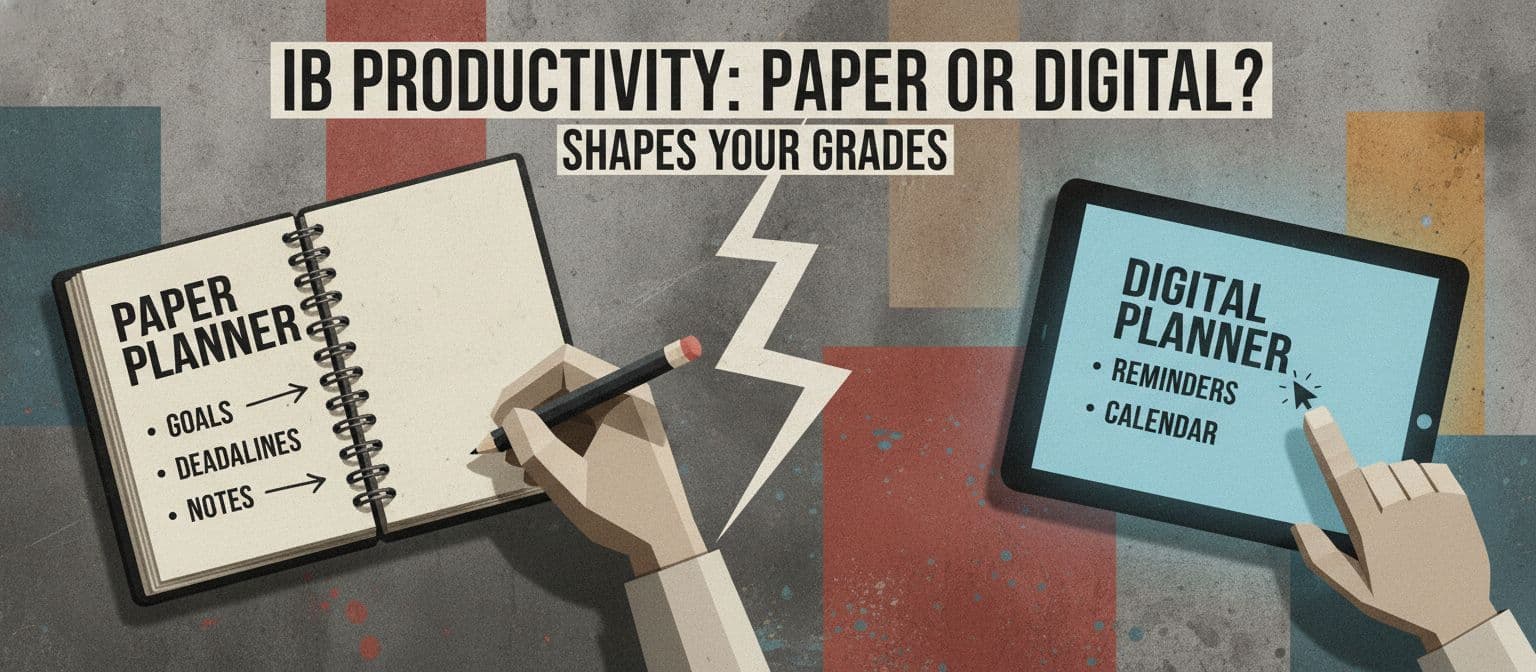
Should you use a paper planner or a digital planner?
Both approaches have passionate supporters. Some students swear by handwritten schedules and physical notebooks. Others cannot imagine planning their lives without apps, reminders, and synchronized calendars.
The truth is that neither option is universally superior. The best planner is the one that aligns with your habits, learning style, and academic needs.
This guide explores the strengths and weaknesses of both systems and helps IB students determine which planning method will support their success.
The Unique Planning Challenges of IB Students
Before comparing planning methods, it is important to understand why IB students require a more sophisticated system than many other learners.
A typical IB student manages:
- Six academic subjects
- Internal Assessments across multiple subjects
- Theory of Knowledge requirements
- Extended Essay milestones
- CAS activities and reflections
- University applications
- Revision schedules
- Personal commitments and extracurricular activities
Unlike traditional school systems where assessments are concentrated around exams, the IB demands consistent performance across many components throughout two years.
Missing a single deadline can create a chain reaction that affects several other commitments.
Because of this, planning is not optional. It is a survival skill.
Understanding the Appeal of Paper Planners
Paper planners have existed for decades and remain popular despite the rise of technology.
Many IB students continue to rely on physical planners because they offer a sense of control and focus that digital tools sometimes struggle to replicate.
The Benefits of Paper Planners
Improved Memory Retention
Research consistently suggests that writing things down by hand helps improve information retention.
When students physically write:
- Assignment deadlines
- Revision schedules
- Essay milestones
- Weekly goals
they process the information more deeply.
The act of writing creates an additional cognitive connection that can improve recall.
Reduced Digital Distractions
One of the greatest advantages of paper planning is the absence of notifications.
When students open a physical planner, they are not interrupted by:
- Social media alerts
- Messages
- Emails
- News updates
This creates a focused environment that allows students to think clearly about priorities.
Better Visual Overview
Many students find it easier to see their entire week or month on paper.
A physical planner provides a clear visual layout that can make workload management feel more tangible and manageable.
Greater Satisfaction
There is something uniquely satisfying about crossing tasks off a handwritten list.
For many students, this simple action creates a sense of achievement that encourages consistency.
The Limitations of Paper Planners
Despite their strengths, paper planners are not perfect.
Difficult to Update
IB schedules change frequently.
Teachers move deadlines.
Group projects get rescheduled.
Revision priorities shift.
With a paper planner, changes often result in crossed out notes, cluttered pages, and reduced clarity.
No Automated Reminders
A paper planner cannot remind you about a TOK presentation tomorrow or an IA submission due next week.
Students must actively remember to check their planner.
For busy IB students, this can become a risk.
Limited Accessibility
A physical planner can only be accessed when it is physically present.
If you forget it at home, you lose access to your schedule for the day.
Why Digital Planners Have Become Popular
Digital planning tools have experienced massive growth among students over the past few years.
Applications such as Google Calendar, Notion, Todoist, and Microsoft To Do have transformed how students organize their academic lives.
For IB students juggling multiple responsibilities, digital tools offer powerful advantages.
The Benefits of Digital Planners
Instant Updates
One of the biggest advantages of digital planning is flexibility.
Tasks can be:
- Rescheduled instantly
- Reorganized easily
- Prioritized quickly
- Categorized efficiently
This is especially useful during high pressure IB periods when plans change regularly.
Automated Reminders
Digital planners act like personal assistants.
Students can create reminders for:
- IA checkpoints
- CAS reflections
- EE drafts
- Exam preparation milestones
Instead of relying solely on memory, students receive timely prompts that reduce the likelihood of missed deadlines.
Access Across Devices
A digital planner can be available on:
- Smartphones
- Tablets
- Laptops
- Desktop computers
This allows students to access schedules wherever they are.
Whether sitting in class, studying at home, or commuting, important information remains available.
Powerful Organization Features
Digital tools allow students to:
- Color code subjects
- Create recurring tasks
- Track long term projects
- Filter priorities
- Store notes alongside tasks
This level of organization can be particularly valuable during the IB Diploma Programme.
The Drawbacks of Digital Planners
While digital planning offers impressive functionality, it also introduces challenges.
Increased Distractions
A student may open their planner to check an assignment deadline and suddenly find themselves scrolling social media fifteen minutes later.
The same device that helps with productivity can also destroy focus.
Overcomplicated Systems
Many students spend excessive time designing productivity systems rather than actually studying.
Complex dashboards, templates, and productivity setups may look impressive but often provide little academic value.
Planning should support learning, not replace it.
Technology Dependence
Digital systems depend on:
- Battery life
- Internet access
- Device availability
Technical issues can occasionally disrupt access to important schedules.
What Research Suggests About Planning Effectiveness
Interestingly, research does not clearly identify one planning method as universally superior.
Instead, studies often show that consistency matters more than the specific tool used.
Students who regularly review their schedules, update priorities, and follow structured plans tend to outperform students who plan inconsistently.
In other words, the effectiveness of a planner depends less on the format and more on the habits surrounding it.
A perfectly designed digital system is useless if it is ignored.
Likewise, a beautifully crafted paper planner provides no benefit if it remains unopened.
What Top Performing IB Students Often Do
Many high achieving IB students do not choose one system exclusively.
Instead, they combine the strengths of both approaches.
This hybrid method is becoming increasingly common.
Digital for Deadlines
Students use digital calendars for:
- Assessment due dates
- IA checkpoints
- CAS deadlines
- University applications
- Exam schedules
The reminder functionality ensures important commitments are not forgotten.
Paper for Daily Execution
At the same time, students often use paper planning for:
- Daily task lists
- Study blocks
- Weekly priorities
- Reflection and goal setting
This combines digital reliability with handwritten focus.
The result is a planning system that offers both structure and flexibility.
How to Choose the Right Planner for Your Personality
Choosing a planner should not be based on trends.
It should be based on how you naturally work.
A Paper Planner May Be Better If You:
- Enjoy handwriting notes
- Learn visually
- Get distracted by screens
- Prefer simplicity
- Like physically tracking progress
A Digital Planner May Be Better If You:
- Frequently adjust schedules
- Manage multiple commitments
- Want automated reminders
- Use several devices daily
- Prefer searchable and organized information
A Hybrid System May Be Better If You:
- Want flexibility and focus
- Need deadline reminders
- Enjoy handwritten planning
- Struggle with organization during busy periods
For many IB students, the hybrid approach offers the best balance.
Creating a Planning System That Actually Works
Regardless of the format you choose, follow these principles:
Review Your Planner Daily
A planner only works when it is used consistently.
Spend a few minutes every morning reviewing priorities.
Plan Weekly, Not Just Daily
Daily planning helps with execution.
Weekly planning helps with strategy.
Both are important.
Schedule Revision Early
Many IB students wait until exams approach before creating revision plans.
Top performers begin months earlier and spread revision across manageable sessions.
Track Major Deadlines
Always keep a visible record of:
- Internal Assessments
- Extended Essay milestones
- TOK submissions
- Mock exams
- Final examinations
Leave Buffer Time
Unexpected challenges are inevitable.
A strong planning system includes room for delays and adjustments.
Final Verdict: Which Planner Is Best for IB Students?
The debate between paper and digital planners does not have a universal winner.
Paper planners offer focus, simplicity, and stronger engagement through handwriting.
Digital planners provide flexibility, reminders, and powerful organizational tools.
The best system depends on how you learn, work, and manage responsibilities.
For many IB students, the most effective approach is not choosing one over the other. It is combining both in a way that supports productivity without creating unnecessary complexity.
At the end of the day, the planner itself will not improve your grades.
What improves grades is consistently following a plan, staying ahead of deadlines, and maintaining control over your workload.
Whether that plan lives on paper, on a screen, or somewhere in between, the real advantage comes from using it every day.
Table of contents
Share
Related reading
- How IB Students Can Get 8 Hours of Sleep DailyStruggling to sleep during IB? Learn practical strategies IB students can use to get 8 hours of sleep without sacrificing grades or productivity.
- The IB Time Compression Crisis: Why Students Feel Busier Than Ever but Score the SameWhy IB students feel busier than ever but see the same results. Learn how time compression, fragmented focus, and energy management impact your performance—and how to fix it.
- IB Maths AA or AI: The Choice That Shapes Your ExamsCompare IB Maths AA and AI at HL and SL. Explore exam formats, university requirements and switching deadlines to choose the course that suits your plans.
- AI Mirror or Mask: The Choice That Shapes Your IBDiscover the safe and risky ways to use AI in the IB. Learn how to protect academic integrity, improve learning, and avoid mistakes that could risk your diploma.
- Stop Wasting Time: Prioritise Your IB Subjects SmarterLearn how to prioritise your six IB subjects with a smart study strategy. Allocate time based on HL, SL, strengths, and university goals for better results.
