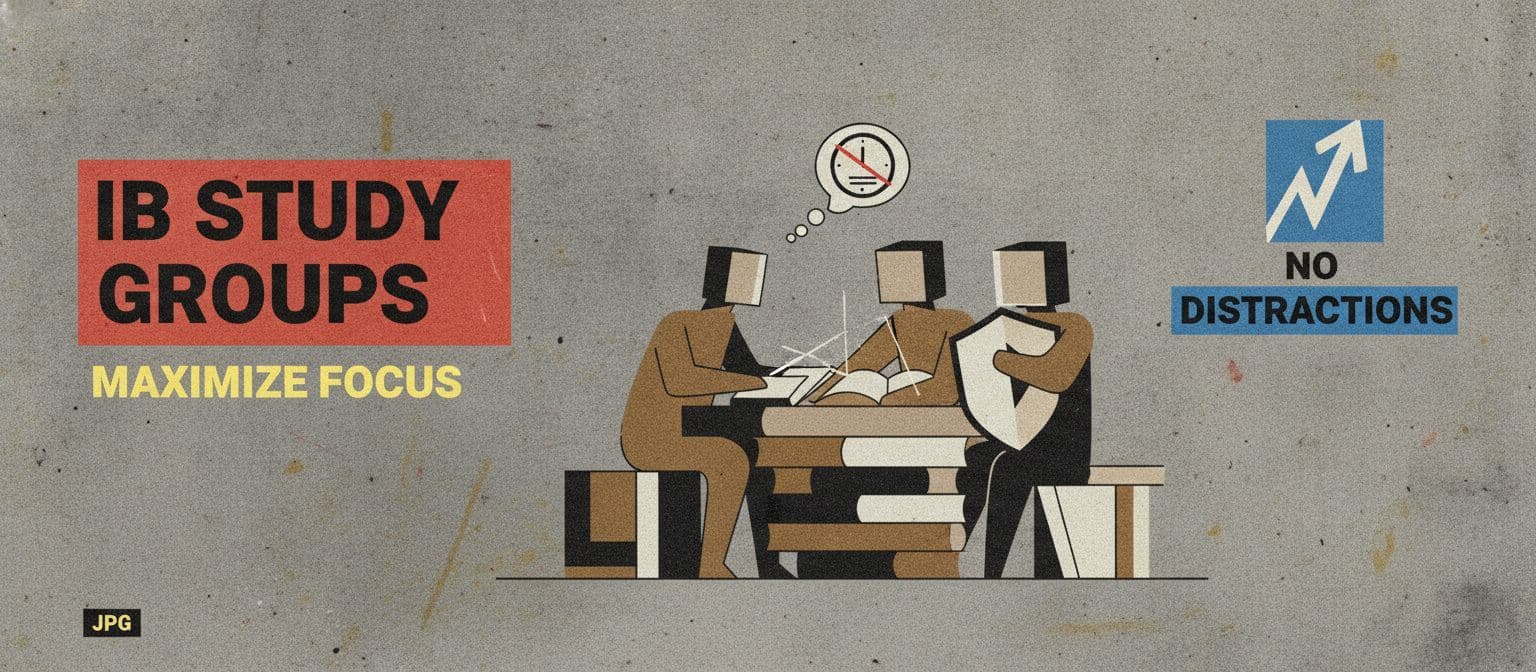
Why Study Groups Can Either Boost or Destroy Your IB Performance
The International Baccalaureate Diploma Programme is often described as one of the most challenging pre university curricula in the world. Between Internal Assessments, Extended Essays, Theory of Knowledge essays, CAS requirements, and rigorous subject coursework, IB students constantly search for ways to study more effectively.
One strategy that many students turn to is joining study groups. In theory, study groups sound perfect. You surround yourself with motivated peers, solve difficult problems together, exchange ideas, and stay accountable.
In reality, however, many IB study groups slowly transform into social gatherings disguised as study sessions. A planned two hour revision session can easily become thirty minutes of work followed by ninety minutes of casual conversation, scrolling through phones, or discussing upcoming assignments without actually completing them.
The truth is that study groups are neither inherently productive nor inherently distracting. Their effectiveness depends entirely on how they are structured and managed.
When used correctly, study groups can become one of the most powerful tools in your IB journey. When used incorrectly, they can silently consume valuable time while creating the illusion of productivity.
Why IB Students Benefit From Study Groups
Before discussing the challenges, it is important to understand why study groups can be so valuable for IB students specifically.
The IB curriculum emphasizes critical thinking, analysis, discussion, and interdisciplinary learning. Unlike traditional memorization based systems, IB assessments often require students to explain, evaluate, compare, and justify their answers.
Studying with others offers several advantages:
- Exposure to different problem solving methods.
- Improved understanding through discussion.
- Increased accountability.
- Better retention through teaching concepts to peers.
- Reduced academic isolation and stress.
Research consistently shows that explaining concepts to others strengthens your own understanding. This phenomenon, often called the "protégé effect," occurs because teaching forces you to organize and simplify information clearly.
In other words, helping a friend understand HL Mathematics may actually improve your own score.
The Biggest Myth About Study Groups
Many students believe that simply gathering with classmates automatically creates a productive study environment.
This assumption causes most study groups to fail.
A study group without structure is similar to a sports team without rules or positions. Everyone participates, but nobody achieves maximum effectiveness.
Common signs of ineffective study groups include:
- No clear agenda.
- Constant switching between topics.
- Frequent phone usage.
- Excessive social conversations.
- Passive studying.
- Unequal participation.
- Sessions that run far longer than planned.
If these problems sound familiar, the issue is not the study group itself. The issue is the lack of structure.
Choose Your Study Group Carefully
One of the most important decisions you will make is choosing who to study with.
Contrary to popular belief, your closest friends are not always your best study partners.
An effective IB study group usually consists of students who:
- Take their academic goals seriously.
- Arrive prepared.
- Respect time limits.
- Participate actively.
- Remain focused on objectives.
- Encourage accountability.
The ideal group size is typically between three and five students.
Smaller groups often lack diverse perspectives, while larger groups become increasingly difficult to manage.
Remember that a productive study group is not a social club. It is a collaborative learning environment with specific goals.
Set a Clear Objective Before Every Session
One of the primary reasons study groups become ineffective is that nobody knows exactly what they are supposed to accomplish.
Before each meeting, establish a clear objective.
For example:
Instead of saying:
"We're studying Chemistry tonight."
Say:
"We will complete ten equilibrium questions, review acid base calculations, and discuss common Paper 2 mistakes."
Specific goals create direction and measurable outcomes.
Some examples of effective objectives include:
- Solving five HL Mathematics proof questions.
- Reviewing one chapter of Biology together.
- Discussing TOK essay knowledge questions.
- Peer reviewing Extended Essay outlines.
- Completing a timed Economics Paper 1 response.
When everyone understands the objective, distractions become easier to identify and eliminate.
Assign Roles During Group Sessions
Many successful study groups operate more effectively when members have defined responsibilities.
Consider assigning roles such as:
Session Leader
This person ensures that the group follows the agenda and maintains focus.
Timekeeper
This individual tracks study periods, breaks, and deadlines.
Question Creator
This member prepares challenging questions or discussion prompts.
Note Organizer
This student records key insights and distributes summary notes afterward.
Rotating these responsibilities prevents one person from carrying the entire workload while increasing engagement among all members.
Use the Pomodoro Technique Together
The Pomodoro Technique is particularly effective in group settings.
A typical session might follow this structure:
- Study intensely for twenty five minutes.
- Take a five minute break.
- Repeat the cycle four times.
- Take a longer break after completing four cycles.
This approach offers several advantages:
- Reduces mental fatigue.
- Maintains concentration.
- Creates natural stopping points.
- Prevents extended periods of distraction.
Most importantly, it establishes clear expectations. During the study period, everyone works. During breaks, everyone can relax.
This separation dramatically improves productivity.
Keep Phones Out of Reach
One notification can derail an entire study session.
Research on attention and productivity repeatedly demonstrates that even the presence of a smartphone can reduce cognitive performance.
Therefore, one of the simplest rules for effective study groups is also one of the most important:
Keep phones away.
Possible strategies include:
- Placing phones in backpacks.
- Using focus applications.
- Creating a shared phone box.
- Activating airplane mode.
- Using website blockers during online sessions.
Temporary discomfort is a small price to pay for significantly improved concentration.
Use Study Groups for Active Learning
One of the biggest mistakes students make is treating study groups as silent libraries.
If everyone sits quietly reading notes for two hours, the benefits of collaboration disappear.
Instead, focus on active learning techniques.
Teach Each Other
Assign each member a topic and have them explain it to the group.
Teaching reveals gaps in understanding faster than passive review.
Solve Questions Together
Work through difficult problems collaboratively and compare approaches.
Conduct Mini Quizzes
Challenge each other with timed questions.
Debate Concepts
This strategy works particularly well for subjects like:
- Economics
- History
- Psychology
- Business Management
- Theory of Knowledge
Active engagement strengthens comprehension far more effectively than passive reading.
Separate Social Time From Study Time
Friendship and productivity do not have to compete.
The key is creating boundaries.
For example:
- Study from 4 PM to 6 PM.
- Socialize from 6 PM to 6:30 PM.
This structure gives students something to look forward to while protecting study time.
Without boundaries, social conversations tend to expand until they dominate the entire session.
Ironically, students often enjoy social interactions more when they know they have already completed productive work.
Use Study Groups Strategically During Different IB Phases
Not every stage of the IB programme requires the same type of collaboration.
During Internal Assessment Season
Study groups can help with:
- Brainstorming research questions.
- Reviewing structures.
- Discussing methodology.
- Identifying common mistakes.
During Extended Essay Preparation
Groups can provide:
- Accountability.
- Peer feedback.
- Motivation.
- Progress tracking.
During Final Exam Preparation
Study groups become especially valuable for:
- Timed practice sessions.
- Reviewing difficult concepts.
- Identifying knowledge gaps.
- Simulating examination conditions.
Understanding when collaborative learning is most useful helps maximize its benefits.
Know When to Study Alone
Despite their advantages, study groups cannot replace individual study.
Certain tasks are better completed independently.
Examples include:
- Memorizing content.
- Practicing calculations.
- Writing essays.
- Reviewing personal mistakes.
- Completing past papers under exam conditions.
A useful principle is this:
Learn independently first.
Collaborate afterward.
Attempting to learn entirely new material during a group session often slows everyone down.
The strongest study groups consist of students who arrive prepared.
Watch for Warning Signs
Not every study group remains productive forever.
Be alert for signs that your group is becoming ineffective:
- Sessions frequently start late.
- Social conversations dominate.
- Members stop preparing.
- Attendance becomes inconsistent.
- Goals are rarely achieved.
- Discussions become repetitive.
If these issues persist, consider restructuring the group or finding new study partners.
Protecting your academic performance should always take priority over maintaining an ineffective study routine.
Creating the Perfect IB Study Group Formula
The most effective IB study groups usually follow a simple formula:
Preparation + Structure + Accountability + Active Learning = Success
Students often search for secret study techniques or productivity hacks, but the truth is simpler.
Consistency, focus, and intentional collaboration produce the best results.
A well managed study group acts as a multiplier. It enhances motivation, deepens understanding, and makes the demanding IB journey feel more manageable.
Final Thoughts
Study groups are powerful, but they are not magical.
They can elevate your understanding, improve accountability, and reduce stress. They can also become one of the biggest sources of wasted time if left unmanaged.
The difference lies in structure.
The next time you organize an IB study session, avoid asking:
"Who wants to study together?"
Instead, ask:
"What exactly are we going to accomplish together?"
That single question often determines whether your study group becomes a productivity powerhouse or simply another distraction.
Table of contents
Share
Related reading
- Why IB Students Who Study Less Often Score HigherDiscover why IB students who prioritize precision over study hours achieve better results. Learn the smarter study strategy for 2026 and beyond.
- The Summer Study System That Still Works in SeptemberBuild an IB study system that survives September. Learn practical strategies to manage six subjects, deadlines, and CAS while staying consistent.
- Why Studying More Is Hurting IB Students in 2026Discover why studying smarter, not longer, is the key to IB success in 2026. Learn precision based strategies to boost your scores.
- The IB Success Secret Nobody Tells You About TeachersLearn how strong relationships with IB teachers can boost grades, improve feedback, and unlock opportunities. Start building them today.
- The Surprising Study Habits Behind Top IB ScoresDiscover the surprising revision strategies top IB scorers actually use and learn how to study smarter, score higher, and transform your results.
