Introduction
The day IB results are released is one of the most emotional moments in a student's academic journey. Months, and often years, of hard work finally turn into numbers on a screen. For some, the results bring celebration. For others, they raise questions about the next step. Regardless of the outcome, one thing is true for every student.
Receiving your IB results is not the finish line.
It is the beginning of a new chapter that leads to university life. Between results day and your first university orientation, there are several important milestones that deserve your attention. Managing this period wisely can make your transition smoother, reduce unnecessary stress, and help you start university with confidence.
Instead of treating the summer as a long holiday, think of it as a preparation phase. The decisions you make during these weeks can influence your academic success, finances, and overall university experience.
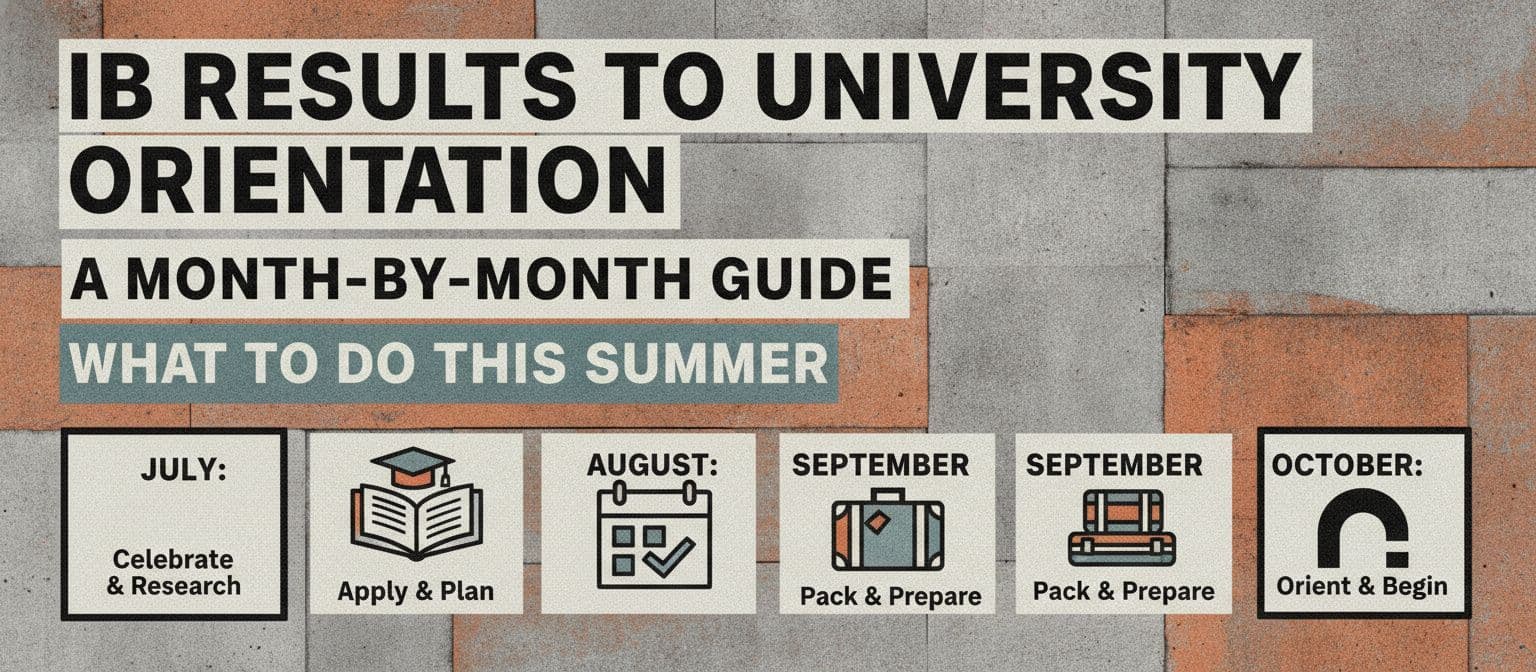
This month by month guide walks you through everything you should focus on after receiving your IB results until the day you arrive on campus.
July: Understand Your Results and Confirm Your University Place
For most students, July begins with one major event, the release of IB Diploma Programme results.
The first thing to do is carefully review your results. Check your total points, subject grades, and core points from Theory of Knowledge and the Extended Essay.
If your scores meet the conditions of your university offer, congratulations. The next step is confirming your admission according to your university's instructions.
Many universities update application portals automatically, while others may ask students to upload official transcripts or complete additional documentation.
Do not assume everything happens automatically. Log in to your university portal and verify that your admission status has been updated.
If your results are lower than expected, avoid making rushed decisions.
Consider the following options.
- Request a remark if you genuinely believe your marks do not reflect your performance.
- Explore universities with available admissions.
- Contact admissions offices to discuss your situation.
- Speak with your school counselor about realistic alternatives.
Many students successfully find excellent opportunities even if their original plans change.
Organize Important Documents
Once your university place is confirmed, begin collecting all essential documents in one secure location.
These usually include:
- IB transcripts
- Passport
- University admission letter
- Student visa documents where applicable
- Financial documents
- Medical records
- Vaccination certificates
- Insurance documents
Keep both printed and digital copies.
Having everything organized early prevents unnecessary stress closer to your departure date.
August: Complete Every Administrative Requirement
August is often the busiest month before university begins.
Most institutions send several emails requesting action from new students. Missing deadlines can create avoidable complications.
Carefully monitor your email and university portal for updates.
Common tasks include:
- Accepting your final admission offer.
- Paying tuition deposits.
- Registering for student accounts.
- Uploading identity documents.
- Completing enrollment forms.
Create a checklist so nothing is overlooked.
Apply for Student Accommodation
If you will be living away from home, housing should become a top priority.
Many university residences operate on a first come, first served basis.
If campus accommodation is unavailable, begin researching private housing options.
When comparing accommodation, consider:
- Distance from campus.
- Transportation options.
- Internet access.
- Safety.
- Monthly expenses.
- Grocery stores and healthcare facilities nearby.
Avoid signing rental agreements without reading all terms carefully.
If possible, join student housing groups recommended by your university.
Begin Visa and Travel Planning
International students should start visa applications immediately after confirming admission.
Visa processing times vary by country, and unexpected delays are common.
Prepare every required document carefully and schedule appointments as early as possible.
Once your visa is approved, begin planning your travel.
Book flights well in advance whenever possible.
Compare airline baggage policies because students often travel with more luggage than usual.
Build Financial Readiness
University life introduces many expenses beyond tuition fees.
Create a realistic budget covering:
- Accommodation.
- Food.
- Transportation.
- Books.
- Health insurance.
- Daily living expenses.
- Emergency savings.
Students who develop budgeting habits before arriving on campus often experience less financial stress during their first semester.
If your university offers financial literacy resources, take advantage of them.
September: Prepare Yourself Academically
After months of intense IB preparation, many students want a complete break from academics.
A short break is healthy.
However, spending some time preparing for university can make your transition much easier.
Research your chosen degree program.
Understand:
- Core first year subjects.
- Recommended reading.
- Required software.
- Laboratory requirements if applicable.
- Writing expectations.
You do not need to study extensively.
Simply becoming familiar with the curriculum helps reduce anxiety during your first weeks.
Strengthen Practical Skills
University success depends on much more than academic knowledge.
Use your summer to improve practical life skills such as:
- Time management.
- Cooking basic meals.
- Laundry.
- Budgeting.
- Email etiquette.
- Calendar planning.
These everyday skills become surprisingly valuable once university begins.
Students often underestimate how much independence university requires.
Learning these skills now makes the adjustment far smoother.
Improve Your Digital Organization
Before classes begin, organize your digital workspace.
Create folders for:
- Course materials.
- Assignments.
- Personal documents.
- Financial records.
- Internship applications.
Install any software recommended by your university.
Become comfortable using cloud storage so your important files remain backed up.
A well organized digital system saves countless hours throughout your degree.
Learn About Campus Resources
Universities offer many services that first year students often ignore simply because they do not know they exist.
Spend time exploring your university website.
Look for information about:
- Academic advising.
- Career services.
- Writing centers.
- Mental health support.
- Student clubs.
- Libraries.
- Sports facilities.
- Internship offices.
Knowing where to seek help before problems arise makes university life significantly easier.
Connect With Future Classmates
Many universities create online communities for incoming students before the semester begins.
Joining these groups allows you to:
- Meet classmates.
- Find roommates.
- Ask questions.
- Learn about campus life.
- Build friendships before arrival.
Starting university already knowing a few people can make the first week much less intimidating.
Prepare Emotionally for Change
Leaving school can feel surprisingly emotional.
Many students experience excitement mixed with uncertainty.
This is completely normal.
University represents more than a new academic environment.
It often means moving to a new city, meeting unfamiliar people, and becoming responsible for your daily routine.
Spend quality time with family and friends before leaving.
Create memories without worrying constantly about university.
A balanced emotional transition is just as important as academic preparation.
The Week Before Orientation
As orientation approaches, focus on final preparations.
Double check:
- Travel tickets.
- Accommodation details.
- Required documents.
- Emergency contacts.
- Bank accounts.
- Mobile phone arrangements.
- University login credentials.
Pack thoughtfully rather than bringing everything you own.
Most items can be purchased after arrival if necessary.
Leave enough luggage space for important essentials.
What to Expect During Orientation
Orientation is your introduction to university life.
You will likely:
- Meet professors.
- Attend campus tours.
- Register for courses.
- Learn about student services.
- Join clubs and societies.
- Meet classmates.
- Understand academic expectations.
Attend as many orientation activities as possible.
Students who actively participate often adapt more quickly and develop stronger social networks.
Even if you feel shy, remember that almost everyone around you is experiencing the same uncertainty.
Common Mistakes to Avoid During the Summer
Many students unintentionally create unnecessary stress before university.
Some of the most common mistakes include:
- Ignoring university emails.
- Delaying accommodation applications.
- Missing visa deadlines.
- Waiting until the last week to pack.
- Overspending before creating a budget.
- Assuming university will work exactly like school.
Being proactive throughout the summer helps prevent these issues.
Turning the Summer Into an Opportunity
This period between IB results and university orientation is more valuable than many students realize.
It is a chance to develop independence, improve organization, and prepare for a completely new stage of life.
Instead of seeing summer as empty time, use it to build habits that will support you throughout your university journey.
Even small improvements in planning, budgeting, communication, and self management can make a noticeable difference once classes begin.
Final Thoughts
Receiving your IB results is an incredible milestone, but it is only the first step toward your university journey.
The weeks that follow are filled with important decisions that shape your transition into higher education. By approaching each month with a clear plan, you can reduce stress, stay organized, and begin university feeling confident rather than overwhelmed.
Your IB journey has already taught you resilience, discipline, and critical thinking. Now it is time to apply those same qualities beyond the classroom.
A successful university experience does not begin on your first day of lectures.
It begins the moment you receive your IB results and choose to prepare for everything that comes next.
Table of contents
Share
Related reading
- Stop Chasing IA Deadlines: A Two Year Plan That WorksA practical two-year IA timeline that builds student ownership, reduces deadline stress, improves Internal Assessment quality and saves teachers time.
- The Extended Essay Mistake That Costs Students Two YearsHow to introduce the Extended Essay in DP1 without overwhelming students, using a sequenced approach that builds confidence, curiosity and research skills.
- The IB Induction Week That Builds Two Years of SuccessDesign a practical four day IB induction week that builds student habits, confidence, organisation, and resilience for two years of Diploma success ahead.
- The Real Reason Some IB Students Score 7s Every TimeDiscover the real habits that separate IB students who earn 7s from those who score 5s. Learn practical strategies that improve performance and academic success.
- Before You Start IB, Read What Graduates Wish They KnewDiscover what IB graduates wish they knew before starting the Diploma Programme and avoid the mistakes that cause stress and burnout.
